
How to Handle Liquid Nitrogen Safely: PPE, Filling Procedures, and Emergency Protocol
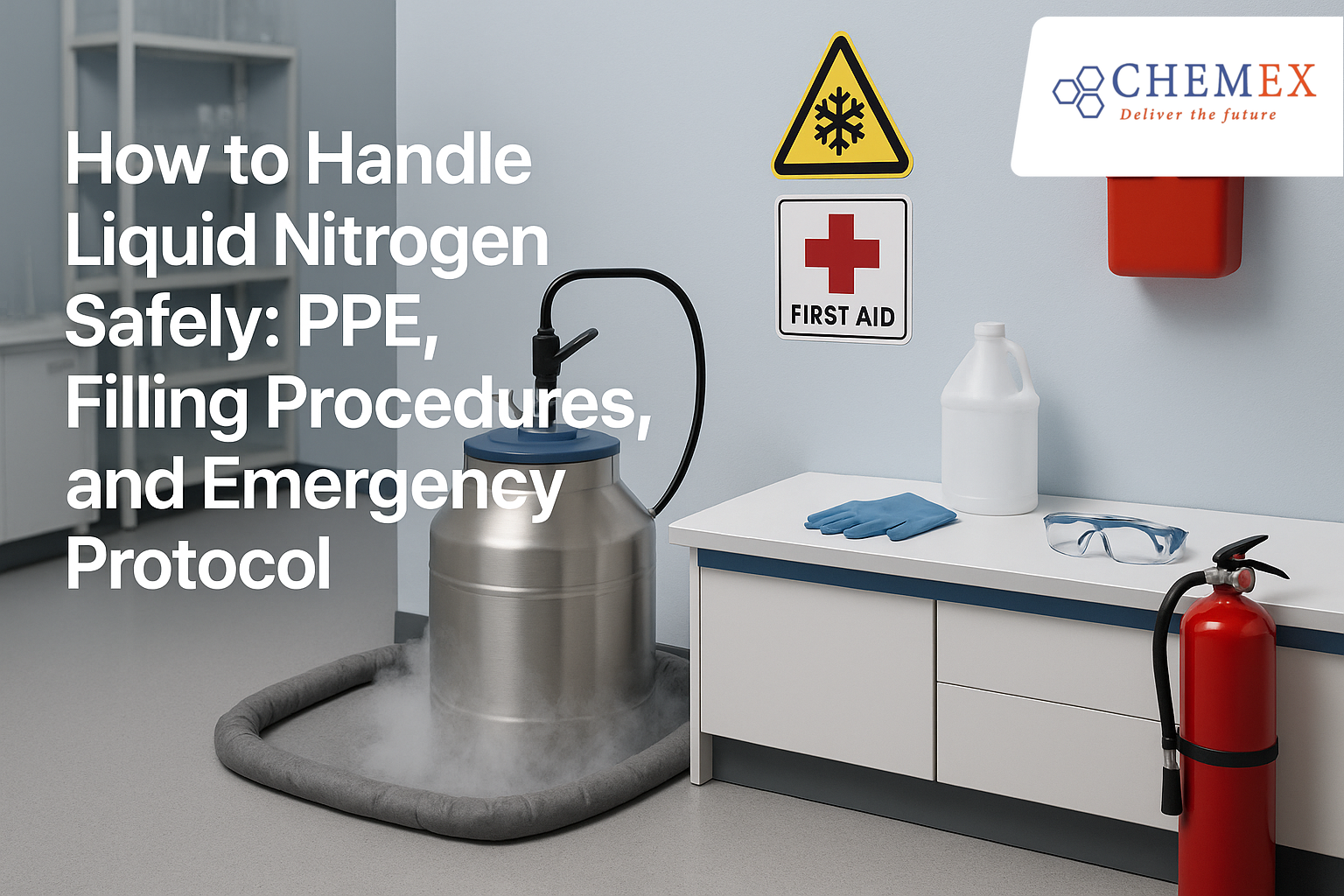
Liquid nitrogen is used routinely in laboratories for cryopreservation and sample storage, but its hazards are easy to underestimate. Direct contact causes severe cold injury, and a release in a confined space can displace oxygen before anyone realises what is happening. This guide helps laboratory staff understand what protection is needed, how to respond when something goes wrong, and what should already be in place before they start work.
Liquid nitrogen safety: what to focus on
Safe liquid nitrogen work depends on the right protection before you start, and on knowing exactly what to do if something goes wrong.
- Choose PPE for the task and the person. Select protection that is fit for purpose, correctly sized, and compatible when worn together. Train everyone on correct donning, doffing, and inspection before use.
- Use only containers specified for cryogenic service. Improperly sealed or cracked tubes can trap liquid or vapour and rupture violently when removed from storage.
- Store with access control and a strict inventory. Limit access to authorised personnel and track specimen movement carefully.
- Treat ventilation and oxygen monitoring as non-negotiable. Exhaust grilles positioned near both the ceiling and floor, combined with oxygen monitors in the breathing zone, help detect and manage nitrogen displacement.
- On an alarm or suspected release, evacuate first. Alert your safety officer, move to a safe location, and secure the area. Do not re-enter until trained responders confirm it is safe.
- Follow written first-aid procedures and notify supervision. Seek medical evaluation after any cold-exposure incident. The decision on treatment rests with a physician, not with the person affected.
Liquid Nitrogen Safety Handling Protocol: PPE and Safe Dispensing and Filling
Getting PPE selection right is the first line of defence during any liquid nitrogen task. Protection that is the wrong size, incompatible with other worn items, or unfamiliar to the user offers much less protection than it should.
Choosing PPE for cryogenic work
PPE selection should be driven by the task: who is doing it, what they could be exposed to, and for how long. That means thinking about fit and comfort as well as protection level. PPE that is too bulky, too warm, or poorly sized tends to get removed, and PPE that reduces dexterity increases the chance of a handling error during a transfer or filling operation.
When several items of PPE are worn together, check that they are compatible. A combination that works individually may not work in practice if one item prevents another from fitting correctly or functioning as intended. Note also that some gloves rated for cryogenic temperature protection are not rated for biological-agent protection, which matters in labs where both hazards are present.
Heat stress and moisture are practical concerns during extended PPE use. Performance can degrade as PPE becomes wet or sweaty, so plan task duration and rest accordingly.
Training, inspection, and care
Everyone who uses PPE during liquid nitrogen work should be trained on correct donning and doffing, particularly when the item may be contaminated. Training should also cover how to inspect PPE before use, how to report faults, and what the limits of the protection are. Clear procedures should define when an item is disposed of versus cleaned or disinfected for reuse, and what checks are required before it is used again.
Safe dispensing and filling
One of the most consistent causes of serious injury during cryogenic work is the use of containers that are not designed for liquid nitrogen. Use only tubes and containers that the manufacturer has specified as suitable for cryogenic storage. Improperly sealed or cracked tubes can allow liquid or vapour to enter. When those tubes are removed from storage and warm rapidly, the contents expand and the tube can break or explode, causing both cold injury and physical impact injury. Inspect containers before use and remove any that are cracked or damaged.
For transfer operations that use gas pressure to move liquid, keep the applied pressure as low as practicable and ensure there is a reliable way to isolate or vent rapidly if needed. Avoid filling into an empty container by gas pressure: pressurising an empty vessel in this way can lead to violent rupture.
Where decanting or pouring is involved, use containers designed to resist normal wear and compatible with cryogenic service. Containers with open tops increase spillage risk. A funnel and a suitable spill containment arrangement, such as a drip tray, help minimise what reaches surfaces and people. Always follow the exact procedure specified in your facility's emergency response plan and the current SDS for any filling or transfer task.
If your work involves cryogenic sample storage in biological research, our cell culture analysis product range includes equipment and consumables designed for laboratory cryogenic applications.
Emergency Response and Post-Incident Actions for Liquid Nitrogen
If something goes wrong with liquid nitrogen, the priority is always to protect people first. The response steps below are general principles. Your facility emergency procedure and the current SDS govern the specific actions required at your site.
When an alarm activates or a release is suspected
Do not stay in the area to investigate. Alert the relevant people immediately: your safety officer, laboratory manager, and, depending on the scale of the incident, external authorities. Evacuate to a safe location and secure the affected area to prevent others from entering. Keeping non-essential people out limits the number who could be exposed.
Do not attempt to re-enter the area or rescue anyone inside without training and equipment appropriate for the hazard. A nitrogen-displaced atmosphere offers no warning to the person entering it. Trained emergency responders with appropriate monitoring and respiratory protection should manage re-entry.
If someone may have been exposed
Written first-aid procedures should be accessible so that staff know immediately what to do and who to contact. General principles include performing immediate decontamination of any exposed area, such as washing skin with soap and water or using an eyewash station for eye exposure, treating the event as an emergency, notifying supervision and safety contacts, and following the facility's reporting procedure.
After any cold-exposure incident, seek medical evaluation. Even if the affected person feels that the injury is minor, a physician should make that judgement. Follow up as advised and document the incident through your facility's normal reporting process.
After the immediate response
Once the area is safe and any injured personnel have been attended to, turn attention to understanding what happened. Investigate the incident to identify what failed, whether that was equipment, procedure, training, or something else, and use those findings to reduce the chance of recurrence. Notifying supervision and following facility reporting procedures is part of closing the incident properly, not just a formality.
For specialised frozen storage and transport needs in pharma and biopharma contexts, our article on the Mobius® 2D Freeze Assembly by Merck covers secure options for frozen liquid containment.
Storage, Ventilation, and Preventing Oxygen Deficiency with Liquid Nitrogen
Good storage practice and thoughtful ventilation design reduce both the day-to-day risk of cold contact and the less visible but serious risk of oxygen displacement. These controls work together, and neither replaces the other.
Controlling access and maintaining inventory
Liquid nitrogen storage should be located in dedicated refrigerators, freezers, or storage areas, with access restricted to authorised personnel. A strict inventory of stocks and specimen movement is not just good laboratory practice; it makes it easier to identify losses, detect container issues early, and account for all materials after an incident.
For specimens stored in liquid or vapour-phase nitrogen, use only manufacturer-specified tubes and containers rated for cryogenic service. Refer back to the dispensing and filling section above for the reasons why container selection is particularly important in this context.
If your lab works with biological materials alongside cryogenic storage, our biology products range supports a broad range of research and storage requirements.
Ventilation design for nitrogen storage areas
Nitrogen vapour from a liquid nitrogen release behaves differently from most chemical vapours. Cold nitrogen is denser than air and initially sinks toward floor level before it warms and rises. A ventilation system designed only for ceiling-level extraction may miss the cold gas layer at floor level where people are standing and working.
Engineering guidance recommends positioning exhaust ventilation grilles both near the ceiling, within approximately 30 centimetres of the ceiling, and near the floor, within approximately 30 centimetres of the floor. Locating these grilles behind likely release points helps draw nitrogen away from the breathing zones of people working in the room.
Oxygen monitoring
Oxygen monitoring is recommended for areas where liquid nitrogen is used or stored. Nitrogen is colourless and odourless, which means there is no sensory warning before oxygen levels in the room fall to a dangerous level. A reliable monitoring system provides the warning that human senses cannot.
Monitors should use at least two sensors, positioned in the breathing zone at approximately 120 centimetres above the floor. The system should provide both audible and visual alarms inside the room, and a remote audible and visual alarm outside the space so that people outside receive a clear warning against entering. This external alarm is particularly important when a room may appear normal from the outside while conditions inside have already become hazardous.
Align your monitoring setup, alarm setpoints, and response actions with your site oxygen-deficiency response SOP and any applicable facility engineering requirements. For standard labware and containment equipment that supports day-to-day cryogenic storage work, see our labware range.
Risks and Duty of Care in Thai Laboratory Work
Understanding the hazards of liquid nitrogen and knowing who carries responsibility for managing them is the foundation for everything else in this guide. The two are connected: you cannot plan effective controls without knowing what you are protecting people from.
What can go wrong and why
The two most direct hazards in laboratory liquid nitrogen work are cryogenic injury and physical injury from container failure.
Cryogenic injury occurs when skin or eyes come into contact with liquid nitrogen, cold vapour, or splashes. The temperatures involved cause burns and frostbite rapidly, and eye exposure is particularly serious because the tissues involved are sensitive and recovery is not guaranteed.
Physical injury from tube breakage or explosion is less obvious but equally real. When liquid or vapour enters an improperly sealed or cracked tube during storage and then rapidly expands as the tube warms, the result can be a violent rupture. This hazard is directly linked to container selection and inspection practices, which is why those steps matter so much during the filling and storage phases of the liquid nitrogen safety handling protocol.
Employer obligations under Thai requirements
Thai occupational safety requirements place specific obligations on employers in relation to hazardous chemicals. Under the Ministerial Regulation on Hazardous Chemicals B.E. 2556, employers are required to clean up or dispose of spilled or leaked hazardous chemicals using methods specified in the safety information for that chemical, and to implement controls that keep airborne concentrations in workplaces and storage areas within official limits. Employers must also conduct and report airborne concentration measurements as required.
Regardless of the precise regulatory category of your workplace, the practical principles are the same: chemical safety information should be current, accessible, and in a language that workers can understand. Controls should be designed to keep exposures within safe limits. And the equipment used to handle and store liquid nitrogen should be fit for the purpose.
Practical reminders
- Confirm that PPE is correctly sized, compatible with other worn items, and that users are trained on its correct use and limitations before any cryogenic task begins.
- Use only manufacturer-specified containers for cryogenic storage and inspect them before each use.
- Restrict access to liquid nitrogen storage areas and maintain a current inventory of stocks and specimen movement.
- Check that your oxygen monitor covers both the breathing zone and that external alarms are functional and audible from outside the room.
- Keep written first-aid procedures accessible and ensure all staff know who to notify immediately after an incident.
- After any incident, follow facility reporting procedures and seek medical evaluation where exposure may have occurred.
Frequently Asked Questions
References
- Personal Protective Equipment (Laboratory Biosafety Manual monograph)
- Laboratory Biosafety Manual, 4th edition
- Ministerial Regulation Prescribing Standards for Management and Operation of Occupational Safety, Health and Working Environment concerning Hazardous Chemicals B.E. 2556 (2013)
- Laboratory Quality Management System: Handbook
- Engineering Requirements for N2 and LN2 Use and Storage
- Laboratory Biosafety Manual, 4th Edition: Outbreak Preparedness and Resilience
- DIW Notification on chemical safety management
- Laboratory Biosecurity Guidance (2024)
- Globally Harmonized System of Classification and Labelling of Chemicals, Rev. 10
- Safe Use and Handling of Flammable Liquids (HSG140)
Laboratory Safety and Chemical Support
Need help sourcing laboratory safety supplies, spill-control materials, or chemicals for your workflow? Contact Chemical Express Thailand for product availability and technical support.